

Table of Contents
Digital business cards are revolutionising the way we connect, they’re sleek, smart, and sustainable. But in the rush to go paperless, many businesses forget one crucial piece of the puzzle:
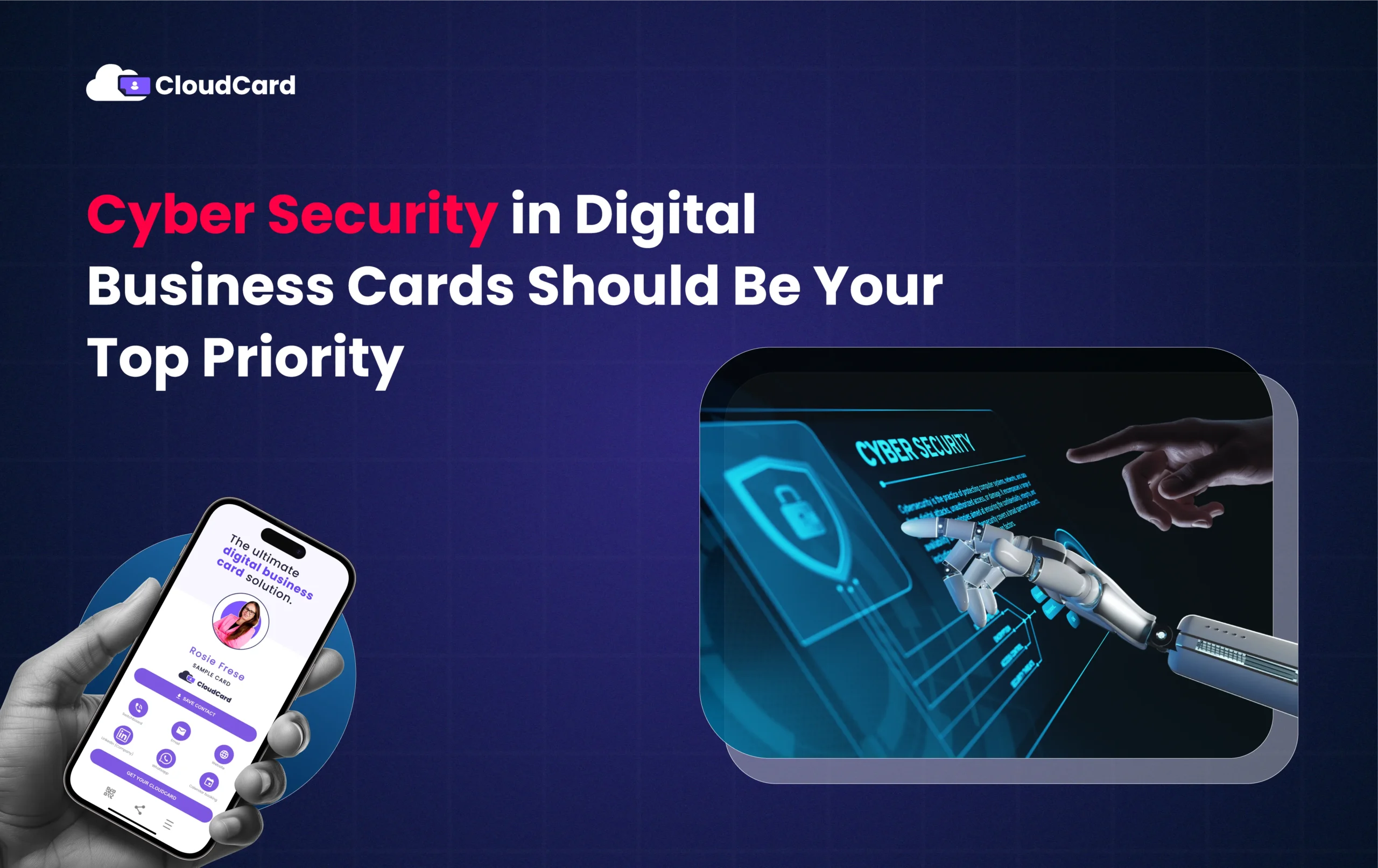
Cyber Security in Digital Business Cards
Whether you’re a solo professional or managing a team of hundreds, the moment you share contact details or collect leads digitally, you’re dealing with data and where there’s data, there must be protection.
In this post, we’ll break down why security matters when choosing a digital business card platform and the key questions you should ask before committing to a provider.
Why Cyber Security in Digital Business Cards Is Non-Negotiable
Digital business cards aren’t just flashy replacements for paper. They’re tools that store and transmit:
- Personal contact details
- Business email addresses
- Phone numbers
- LinkedIn profiles and more
If your provider doesn’t handle that data securely, it opens you (and your business) up to:
- Data breaches
- Privacy violations
- Compliance issues (like GDPR, POPIA, or CCPA)
- Loss of client trust
If you’re using features like lead capture, analytics, and AI-enhanced scanning as you would with CloudCard the need for robust security grows even stronger. You’re now collecting other people’s data, too.
What to Look for in a Cyber Secure Digital Business Card Platform
When evaluating a digital business card solution, you want to go beyond just style and usability. Here are the critical security and compliance questions you should ask:
1. Is the platform GDPR/POPIA/CCPA compliant?
This is your first line of defence. A reputable provider should be fully compliant with the most relevant data protection regulations including the General Data Protection Regulation (GDPR) for Europe, POPIA for South Africa, or CCPA for California.
Ask:
“How does your platform ensure compliance with international and regional data privacy laws?”
2. Where is the data stored?
The location of data storage can impact your legal responsibility as a business. A trustworthy provider should store data in secure, geo-redundant environments — preferably within your regulatory region.
Ask:
“Where is user data hosted, and what security protocols are in place at your data centres?”
3. Is data encrypted at rest and in transit?
This ensures that whether the data is sitting in a database or being shared with someone, it’s protected from unauthorised access.
Ask:
“Do you use encryption for data both at rest and in transit (SSL/TLS)?”
4. Do you offer role-based access control (RBAC)?
Especially important for teams and enterprises, RBAC ensures that only the right people in your organisation can view or edit specific information.
Ask:
“Can I control who on my team has access to lead data, analytics, or editing rights?”
5. How do you protect lead capture forms from spam or malicious use?
If your platform allows you to collect lead info (like CloudCard does), it must protect against abuse, spam, and fake data injection.
Ask:
“Do you have spam filtering or CAPTCHA-style protections on your lead capture forms?”
6. What happens to the data if I cancel my account?
You should have the right to request deletion of your data and assurance that it won’t be stored indefinitely or sold to third parties.
Ask:
“Can I delete all of my data from your platform? Do you sell or share data with third parties?”
How CloudCard Puts Security First
At CloudCard, we understand that with great data comes great responsibility.
That’s why we’ve built our platform with:
- POPIA compliance
- End-to-end encryption
- Secure cloud hosting
- Role-based admin control
Read our blog/interview with our CTO, Michael Frese discussing CloudCards Security
Whether you’re an individual professional or an enterprise admin, you can be confident that your data and your leads are protected every step of the way.
Final Thoughts: Don’t Compromise on Security
A digital business card is more than a digital contact tool it’s a gateway to sensitive personal and business data. In a world where data breaches can cost millions and ruin reputations, security isn’t a feature, it’s a foundation.
So before you choose your provider, make sure they’re not just sleek and functional, but secure and trustworthy.
🔗 Want a secure, powerful, and easy-to-use digital business card solution?
Try CloudCard now for a 14day free trial or book a demo
At CloudCard we have RABC (Rolebased access control), see below what general users can edit and what admins can control:

